Unshipped iOS 27 code hints Siri could run on other models
A developer found two disabled frameworks in iOS 27 that would let another model answer as Siri. Here is what to do with a finding like that: mostly nothing.
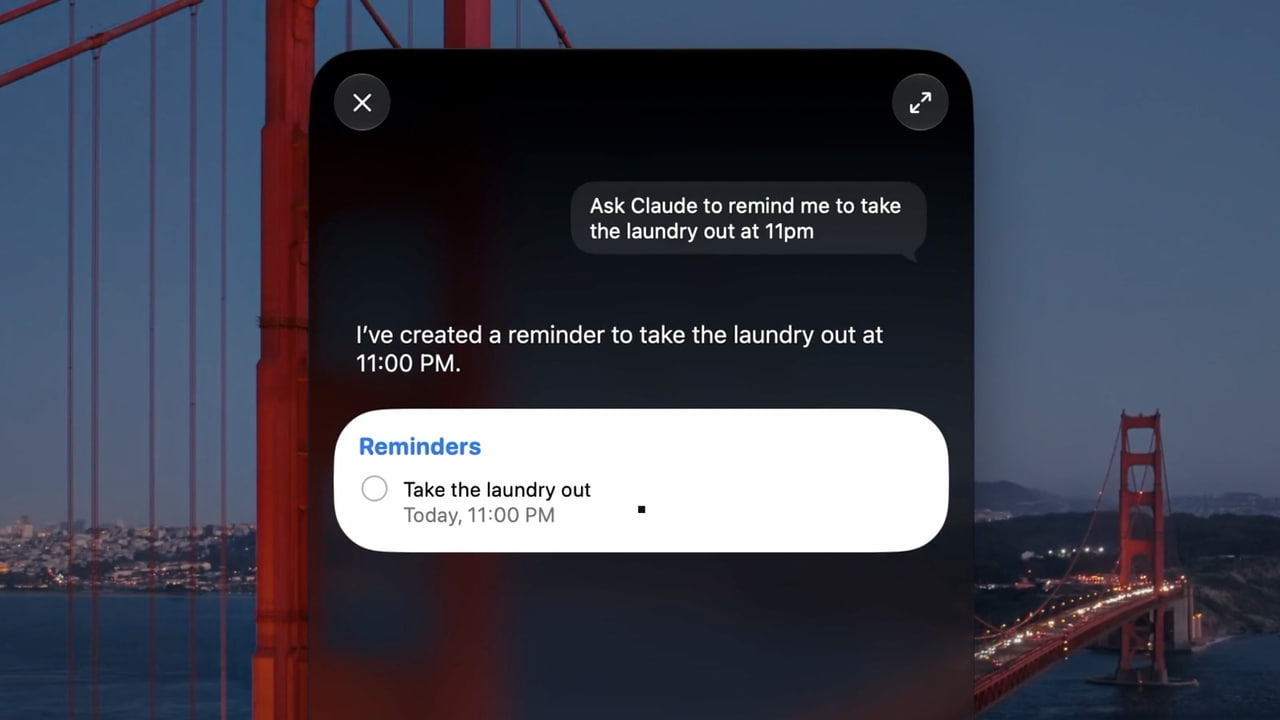
A developer posting as pdfu found two unused mechanisms inside iOS 27 and macOS 27 Golden Gate around 13 September. One, described as a model delegation API, would let a third-party assistant appear as an option in the Ask menu. The other, an inference provider protocol, would let a different model replace Apple's server-side Siri entirely.
The reporting is careful to say none of it is enabled for users, and no third-party access has been announced. We want to be equally careful, because findings like this are the most commonly over-read stories in our industry.
Disabled code is not a roadmap
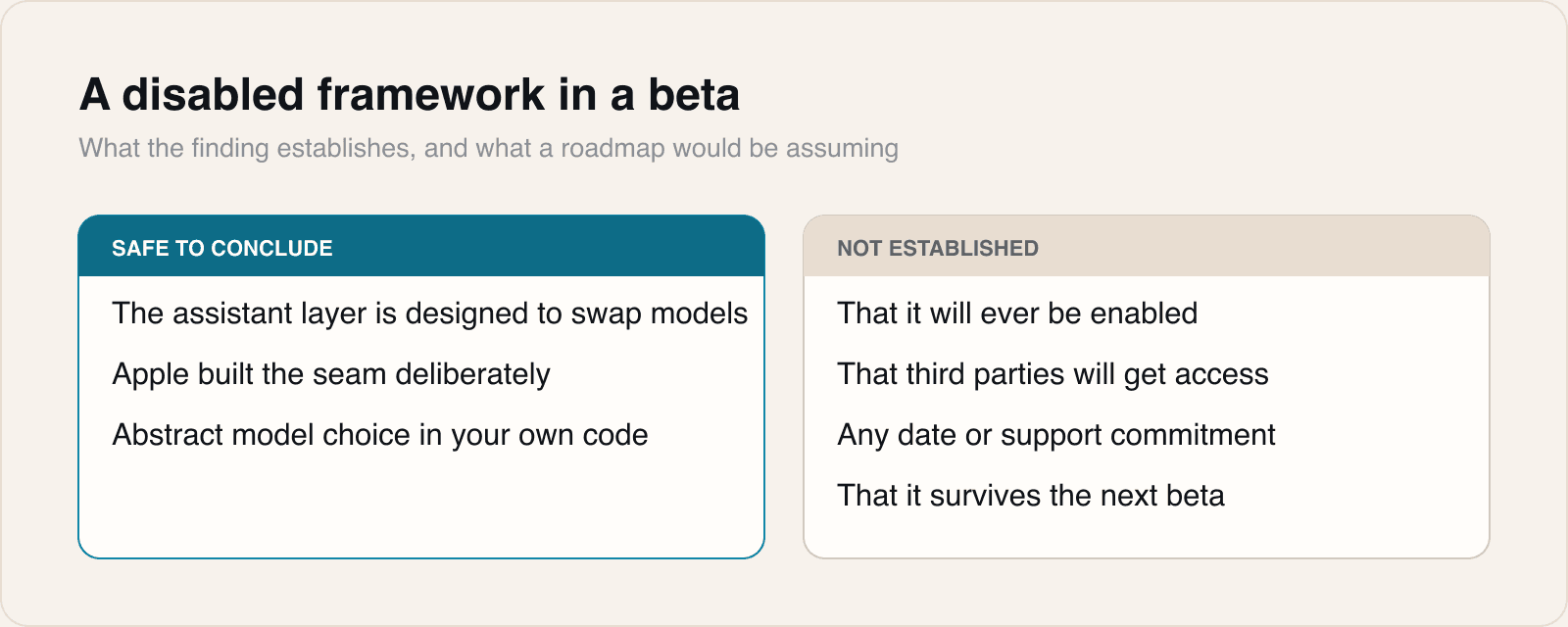
Shipping operating systems are full of capability that never ships. Frameworks get built to prove a design, to keep an option open, or to satisfy a regulator's question, and plenty are removed in a later build with no announcement.
We have watched clients make real commitments on the strength of a string found in a beta. The pattern is always the same: a roadmap gets written around a feature that has no date, no documentation and no support commitment, and then a quarter is spent waiting.
So the practical answer to this story is: change nothing yet.
The architectural point is still worth taking
What the finding does tell you is the direction the platform is being designed in. The assistant layer is being built so the model behind it can be swapped. That is a reasonable thing to assume about every assistant surface now, including the ones you write yourself.
We already build AI features this way and the reasoning has nothing to do with Apple. The price, latency and quality ranking of frontier models has reordered several times a year for the last three years. Any integration written tightly against one provider becomes a rewrite the moment that ranking changes.
What swappable actually requires
Provider independence is usually claimed and rarely true. The parts that leak are specific and predictable.
- Prompt construction. If prompts are assembled inline at each call site, they encode one model's quirks in thirty files. Keep them in one place.
- Response parsing. Tolerate shape differences by validating into your own type at the boundary rather than passing provider objects inward.
- Error and retry semantics. Rate limits, refusals and timeouts differ per provider and are the most commonly hard-coded assumption of the three.
- Streaming. Token-level differences surface directly in the UI, so the view layer should consume your own stream type, not the provider's.
A model should be a configuration value, not an architectural commitment.
The test
A useful check is to ask how long it would take to point the feature at a different model in staging. If the answer is an afternoon, the architecture is right and a story like this one costs you nothing either way. If the answer is a sprint, that is worth fixing now, on ordinary commercial grounds, well before anything Apple may or may not enable.
Then revisit when there is documentation and an entitlement to apply for. Not before.
Sources
Reporting and images linked above belong to their respective publishers and are shown from their own servers. The analysis here is our own.