Apple has stopped signing iOS 26.6.2, and the way back from iOS 27 is now shut
Apple stopped signing iOS 26.6.2 on 21 September, which closes the last official route from iOS 27 back to iOS 26 eight days after the release.
Apple stopped signing iOS 26.6.2 on 21 September 2026, eight days after iOS 27 was released to everyone.
Signing is the server-side check Apple runs when an iPhone is asked to install a build of iOS. The device contacts Apple, Apple either authorises that specific version for that specific device or it does not, and an installation that fails the check cannot proceed. The check applies in both directions, so it governs restoring an older release exactly as it governs installing a new one. Withdrawing a signature is how Apple retires a version, and it is ordinarily done a week or two after a successor ships. 9to5Mac credits the observation to Aaron Perris, who noted the change on X; MacRumors and iClarified reported it the same day.
The practical effect is that anyone already on iOS 27 has no supported route back to iOS 26. iOS 26.6.2 was the last iOS 26 release with a signed restore image, and with that signature withdrawn there is nothing left for a restore to install.
Why iOS 26.7 is not an escape route
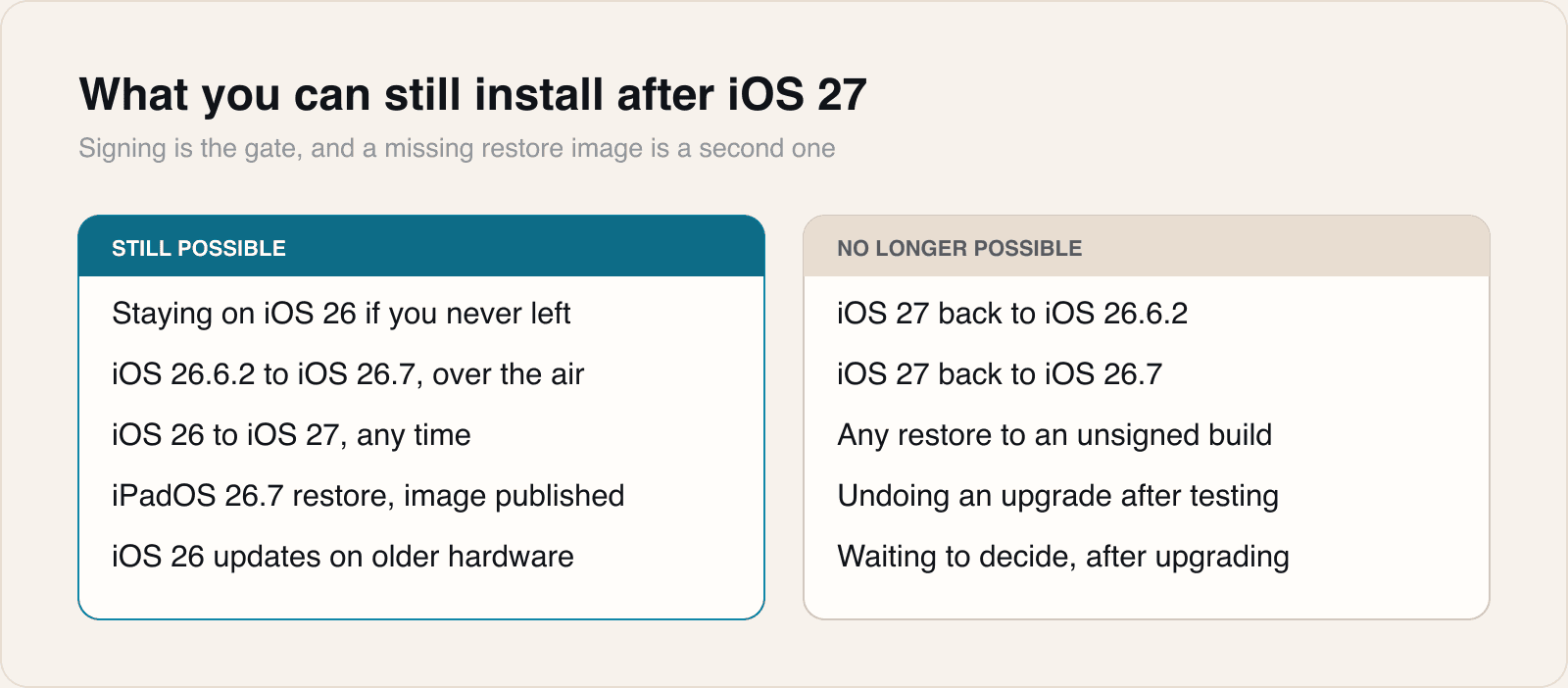
Apple did release iOS 26.7 alongside iOS 27, and at first glance it looks like a place to land. It is not. As 9to5Mac points out, Apple has not published a restore image for iOS 26.7 on iPhone, only an over-the-air update. An over-the-air update can carry a device forward from an earlier iOS 26 build; it cannot be used to take a device backwards from iOS 27. MacRumors reaches the same conclusion by the same route. The inconsistency is on Apple's side rather than in the reporting: iPadOS 26.7 does have a published restore image, so an iPad and an iPhone running nominally the same release are not in the same position.
None of this touches hardware that cannot run iOS 27. Devices still on the iOS 26 track continue to receive iOS 26 updates in the ordinary way, and anyone who has not yet upgraded can go on declining iOS 27 indefinitely. The gate closes only behind people who have already walked through it.
Our take
The timing is what makes this one worth noting rather than the mechanism, which has worked this way for over a decade. Eight days is a short window by the standards of an iOS release, and it is a particularly short window for this release. iOS 27 is the update that turned on the new Siri, and it is also the update sitting underneath a fortnight of unresolved reports about crashes and reboots on the newest hardware. People who upgraded on day one to see what the new Siri did, found something they did not like, and assumed they had the usual couple of weeks to reverse the decision have discovered that they did not.
We would not read this as Apple moving faster than usual to trap anyone. The security argument for unsigning is real and it is the whole point of the mechanism: every signed old build is a build an attacker can persuade a device to install in order to reach a patched vulnerability. iOS 26.6.2 shipped a large batch of security fixes, and leaving its predecessor installable indefinitely would make those fixes optional. What is harder to defend is the iOS 26.7 situation. Apple shipped a release, gave the iPad version a restore image and the iPhone version none, said nothing about why, and the difference only became visible at the moment it stopped being fixable.
For anyone who tests software on real devices, the lesson is an operational one rather than a philosophical one. A device that has been taken to a new major release is, in practice, a device committed to that release for good, and the useful assumption is that the downgrade window closes a week after general availability rather than whenever you get round to it. If you need to hold a phone on the previous major version for regression work, that phone has to be set aside before the upgrade, not after. Archived restore images do not help once the signature is gone, because the signature and not the file is what the device checks.
There is a smaller point for anyone advising other people. The usual reassurance offered to a nervous upgrader, that they can always go back, has not been true on iOS for years and is now conspicuously untrue eight days in. It is better to tell someone the decision is permanent and let them wait than to tell them it is reversible and be wrong.
Sources
 You Can No Longer Downgrade From iOS 27 to iOS 26MacRumors, 2026-09-21
 iPhone users running iOS 27 can no longer downgrade to iOS 269to5Mac, 2026-09-21
 Apple Stops Signing iOS 26.6.2, Blocking Downgrades From iOS 27iClarified, 2026-09-21
Reporting and images linked above belong to their respective publishers and are shown from their own servers. The analysis here is our own.