
visionOS 27 is good. That is still not a reason to quote it.
Faster networking and better spatial scenes make Vision Pro more capable this week. Capability was never the reason clients were not shipping there.
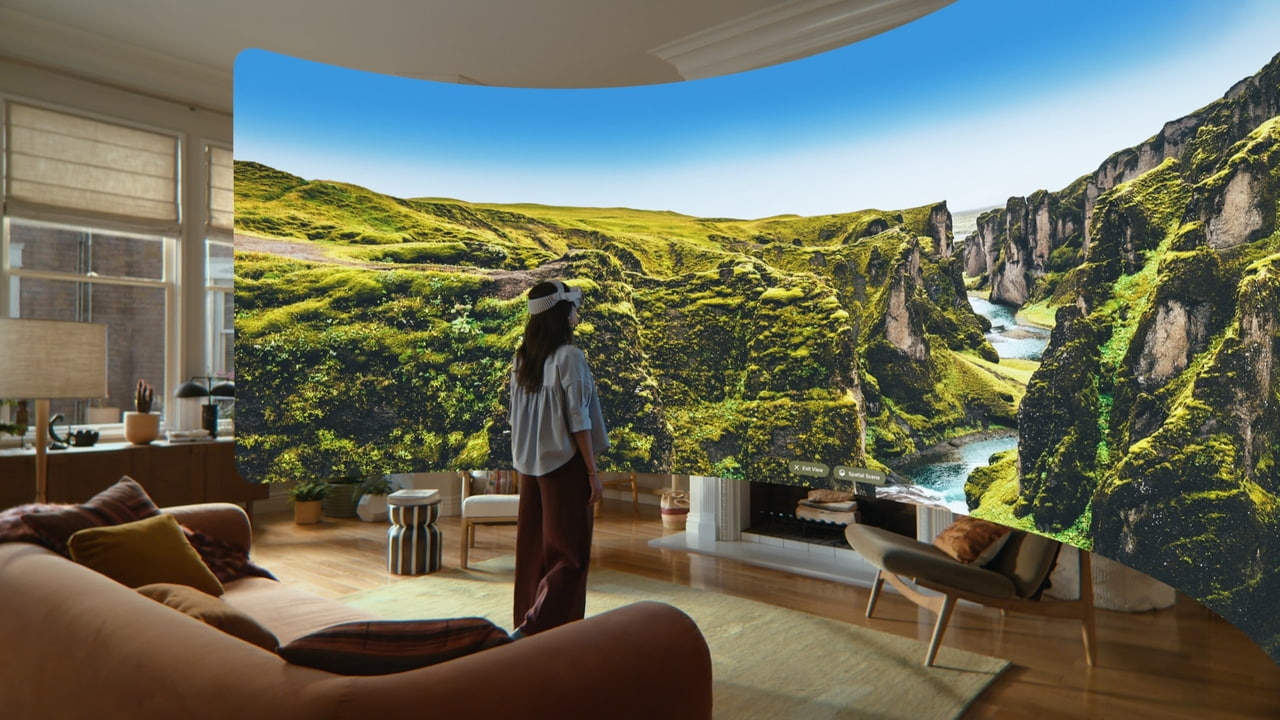
visionOS 27 shipped on 14 September for both the original Vision Pro and the M5 model. It adds Siri AI, Visual Intelligence that can search or answer questions about content in app windows and physical objects, spatial scenes that give panoramic photos real depth, a new Icelandic environment, and Wi-Fi up to three times faster than before.
The networking number is the one we noticed, and we still would not recommend most clients budget for a Vision Pro app this year. Those two positions are consistent, and the reasoning is worth setting out plainly.
Three times the Wi-Fi is a real unblock
Streaming has been the practical ceiling on the interesting spatial work. High resolution immersive content is enormous, and a headset that cannot pull it fast enough produces exactly the experience that makes people take a headset off.
If you have prototyped anything in this space and shelved it over bandwidth, it is worth measuring again on 27 before you accept the old answer.
The blocker was never the device
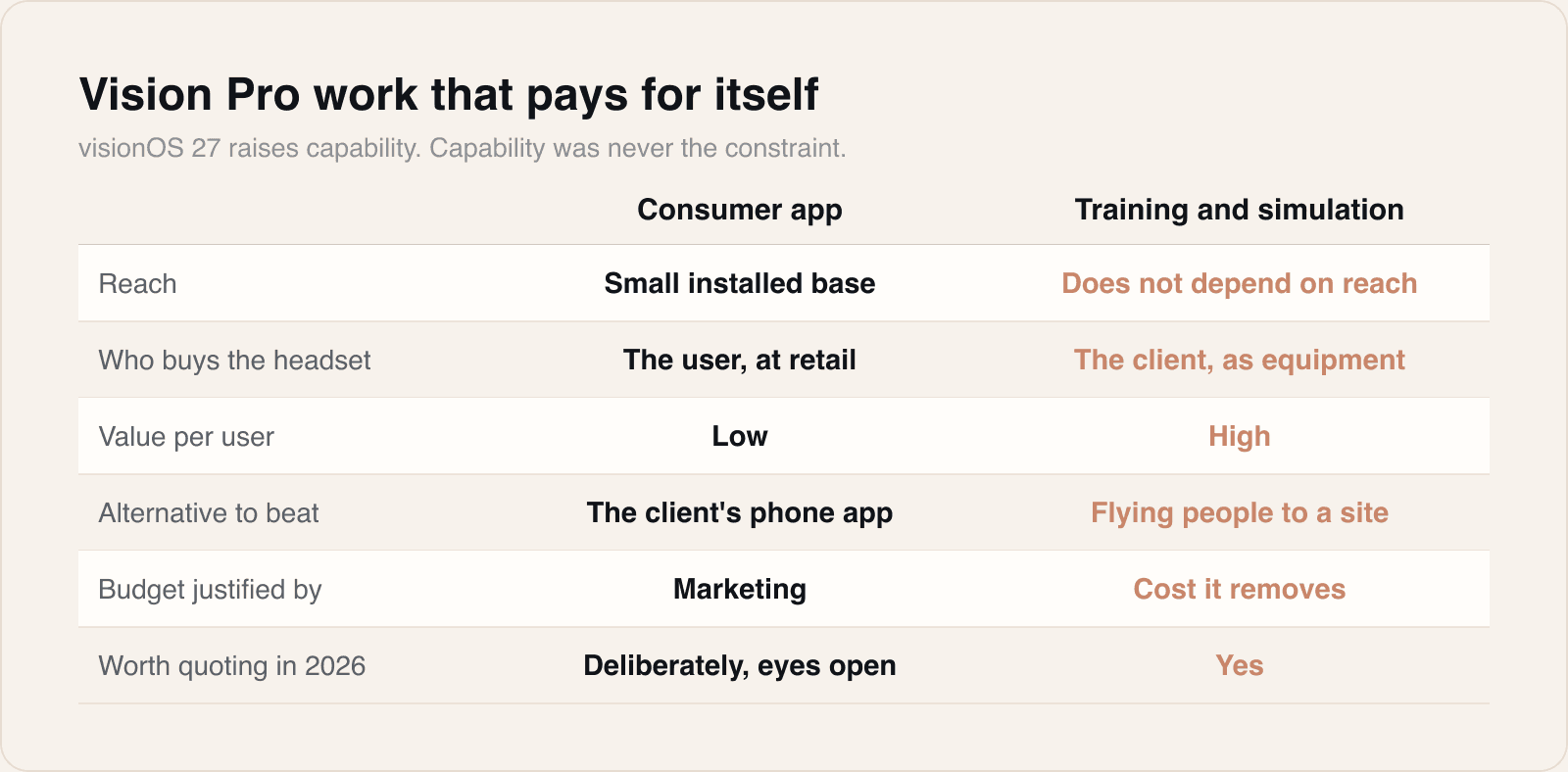
When a client asks about Vision Pro, the question underneath is how many of their users have one. The device is expensive, the installed base is small, and nothing in this release changes either fact.
A consumer app on Vision Pro today is a marketing exercise with an engineering budget attached. That can be a legitimate thing to buy, but it should be bought deliberately, with the reach understood in advance rather than discovered afterwards.
Where it does add up
There is a category where the arithmetic works, and it is not consumer software.
- Training and simulation, where the alternative is physical equipment and the comparison is against a much larger cost.
- Design and engineering review, where a small number of expert users get real value from inspecting something at true scale.
- Medical and industrial procedures, where being hands-free is the entire point.
- Sales tools for physically large products, where one headset per showroom is a rounding error against the thing being sold.
The common shape is that the user count is small and known, and the value per user is high. That is the opposite of the consumer assumption, and it is why the question worth asking a client is not whether spatial is exciting but how many specific named people would use it weekly.
Ask how many people would use it every week. Then count them.
If that number is a real list rather than a market size, the project is worth scoping. We would rather ship one Vision Pro app that gets used daily by forty people than a beautiful one that gets opened once by four hundred.
Sources
Reporting and images linked above belong to their respective publishers and are shown from their own servers. The analysis here is our own.