watchOS 27.0.1 fixes unexpected restarts on Series 12 and Ultra 4
Apple has released watchOS 27.0.1 for the Apple Watch Series 12 and Ultra 4, fixing a bug that made the two newest models restart unexpectedly.
Apple released watchOS 27.0.1 on 23 September 2026, an update that fixes a bug causing some Apple Watch models to restart without warning.
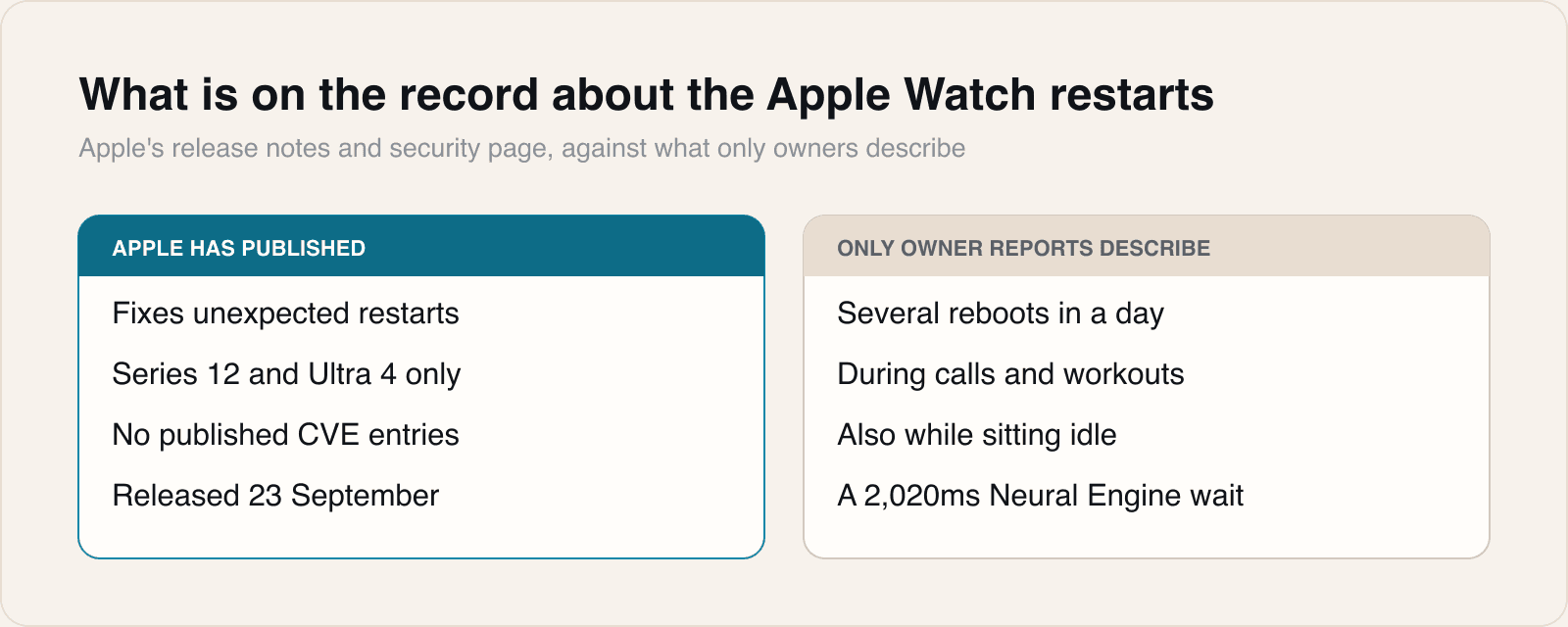
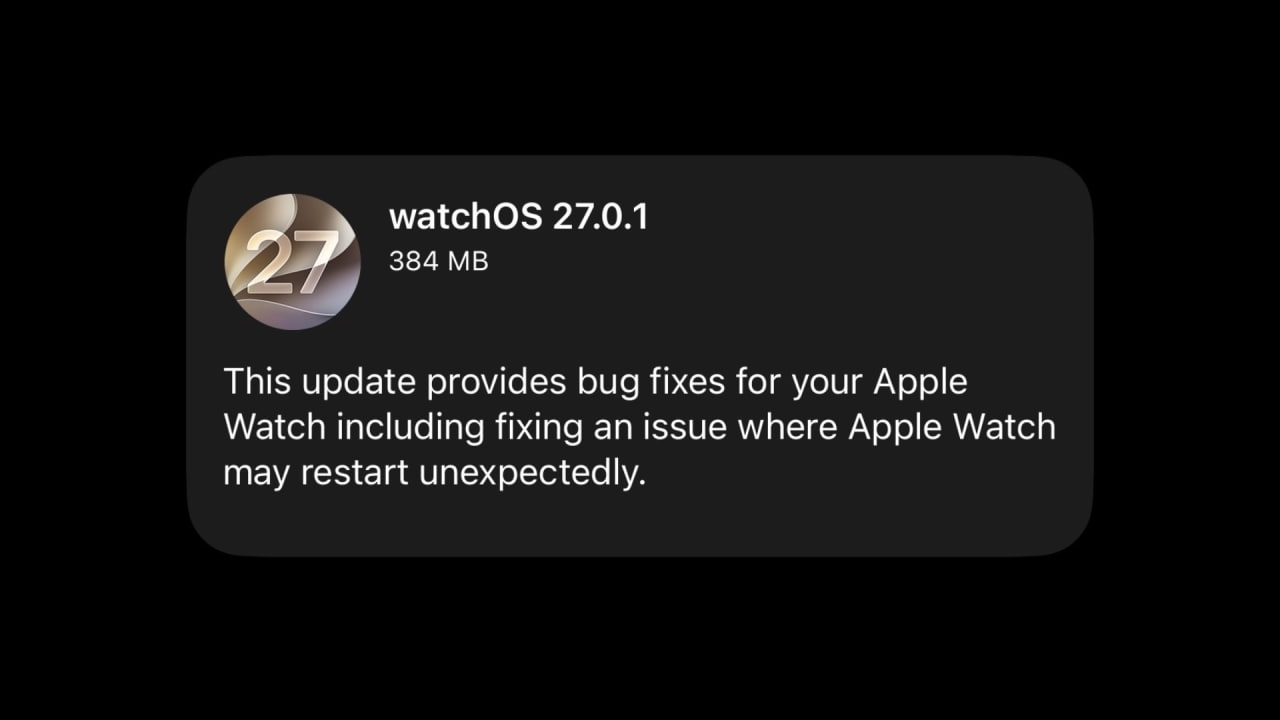
The release notes run to a single sentence, describing the update as a bug fix that addresses an issue where the watch may restart unexpectedly. Apple's security releases page records the same date and lists the update as available for the Apple Watch Series 12 and Apple Watch Ultra 4, with no published CVE entries against it. That device list is narrower than watchOS 27 itself, which the same page lists as available for the Series 9 and later. The update arrived nine days after watchOS 27 reached the public on 14 September.
Owners had been describing the fault for most of that gap. AppleInsider gathered accounts of watches rebooting several times a day, while editing watch faces, during calls, when using Siri AI, on opening Apple Maps or the App Store, and during recorded workouts, with some restarts happening on an idle watch. It also points to an Apple forums post in which a Neural Engine command on an affected watch waited 2,020 milliseconds against a 2,000 millisecond limit before the device rebooted. Apple has not said what caused the restarts, and that figure is one owner's log rather than a diagnosis from the company. iClarified's account of the symptoms follows AppleInsider's closely enough that we would not count it as separate confirmation.
What is documented and what is not
Our take
The most informative thing Apple published about this update is the list of watches it runs on. A point release aimed at the Series 12 and the Ultra 4 alone, when the parent release supports the Series 9 and later, says the fault did not reach three earlier generations running the same operating system. That is not the shape of a bug in shared watchOS code. It points at something specific to the 2026 silicon, or to a code path that only the 2026 silicon takes, and Apple chose not to say which.
The forum log is worth reading carefully rather than dismissing. A command that overruns a two second ceiling by twenty milliseconds and is followed by a restart is the signature of a watchdog doing exactly its job: something failed to answer in time, and the system took the only recovery it has. If that is what happened here, the reboot is not the bug. The bug is whatever left a Neural Engine request waiting, and a fix could plausibly be an increased timeout, a reordered workload or a repaired stall, three very different levels of confidence in the result. We cannot tell which Apple shipped, because a one sentence release note does not distinguish them. We would rather say that than guess.
The context that makes this more than a routine point release is what else Apple is fixing this fortnight. The company has already confirmed that an iPhone 18 Pro update addressing Face ID reboots is due early next week. Two 2026 product lines, both new silicon, both shipping with a restart fault that the previous generation does not have, and both surfacing within days of the first customers receiving them. Each fault has its own cause and neither tells you anything about the other. What they share is a testing window that clearly did not include whatever the first million owners did in their first week.
For anyone who owns one of these watches, the practical advice is unglamorous. Install it. There are no CVEs attached, so this is not urgent for security reasons, but a watch that restarts during a workout is a watch that can lose the workout, and Apple Watch software updates need the device on its charger at above half battery, which means deciding to do it rather than waiting for it to happen. Anyone who booked a service appointment over this should keep the appointment only if the restarts continue after updating.
For anyone shipping a watchOS app, there is a narrow but real telemetry point. A device that restarts mid session does not deliver a crash report for your app, because your app did not crash, and from your side an interrupted workout session and a user who walked away look identical. If your analytics show a rise in abandoned sessions on the newest watches over the past fortnight, the sensible first move is to check whether those users were on watchOS 27.0 before you go looking for a regression in your own code. The same caution applies in reverse: a fix that landed on 23 September will quietly repair a metric you were about to investigate.
Sources
- Apple security releasesApple, 2026-09-23
 Apple releases watchOS 27.0.1 to fix Apple Watch Series 12 and Ultra 4 bug9to5Mac, 2026-09-23
 New Apple Watch models could restart randomly, and watchOS 27.0.1 fixes that bugAppleInsider, 2026-09-23
 watchOS 27.0.1 Fixes Unexpected Restarts on Series 12 and Ultra 4iClarified, 2026-09-23
Reporting and images linked above belong to their respective publishers and are shown from their own servers. The analysis here is our own.