Tailwind - Smart Garage Control
An app for a smart garage door controller, where the interface had to stay honest about hardware it could not always reach.
- Year
- 2024
- Services
- Mobile appsUI/UX design
Controlling physical things is not the same as changing a value
A button that opens a garage door is not a button that updates a record on a server. The door takes seconds to move, it can be obstructed, the controller can drop off Wi-Fi, and the person tapping is often nowhere near the building. The interface has to be honest about all of that.
The failure mode we designed against is the worst one available: an app showing a door as closed when it is standing open. People rely on that screen to decide whether to turn the car around.
What we built
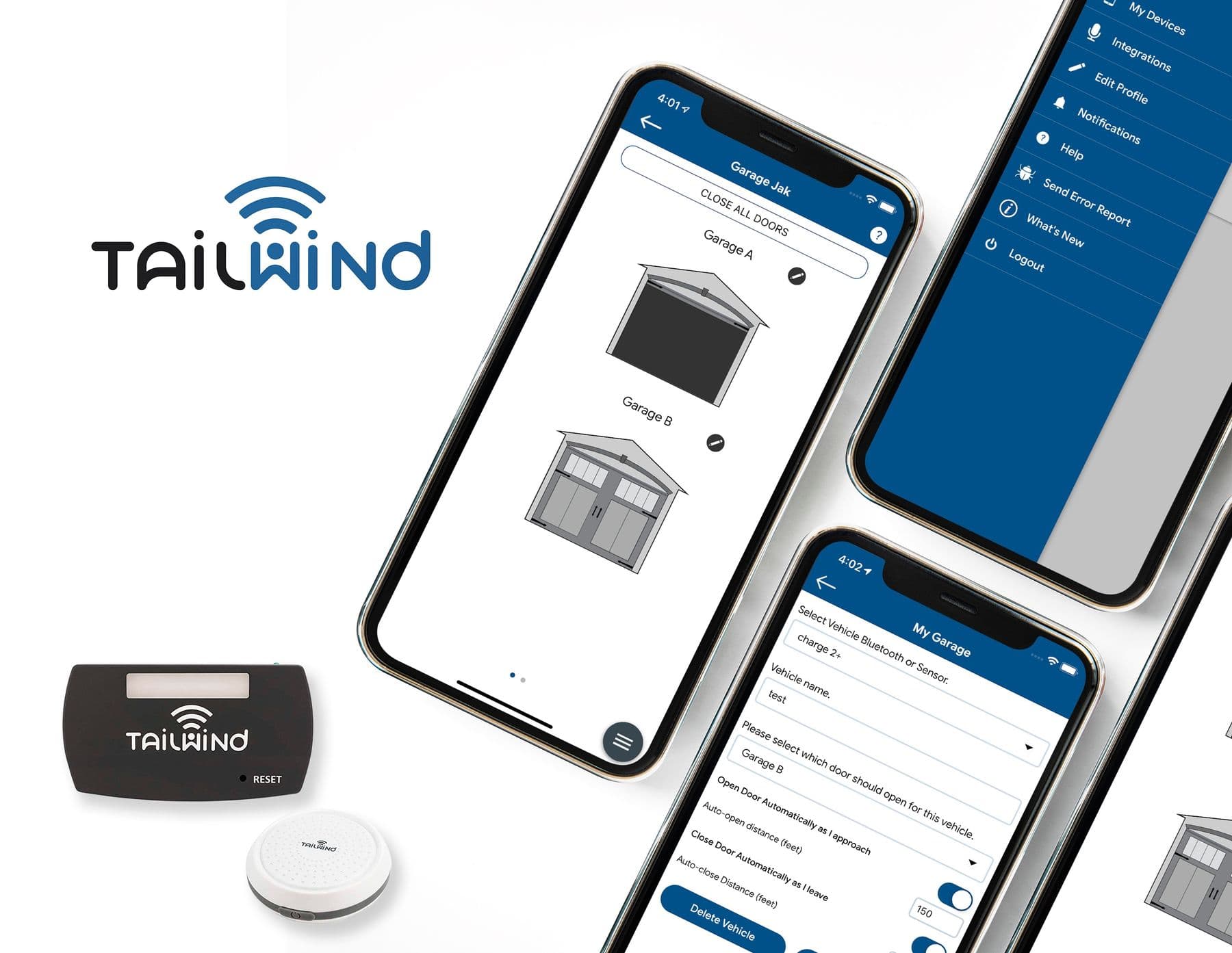
- Real-time state for multiple garages, each with an explicit timestamp
- Optimistic control with rollback when the hardware does not confirm
- Unmistakable states for unknown, moving, obstructed and offline
- Device pairing and Wi-Fi provisioning flow
- Notifications for left-open and unexpected-activity events
Designing for uncertainty
The app never displays a confident state it cannot justify. When the controller has not reported recently, the interface says so and shows when it last did, rather than quietly presenting stale data as current. Users tolerate an app that admits it does not know. They do not forgive one that was wrong.
Provisioning is where IoT products lose people
Getting a device onto a home network is the step most consumer hardware fumbles. We spent disproportionate effort on that first run - failure messages that name the actual problem, retries that explain themselves, and a path that survives a mistyped Wi-Fi password without starting over.