
Halide 3.2 sets the iPhone 18 Pro aperture to any f-number, not just Apple's four stops
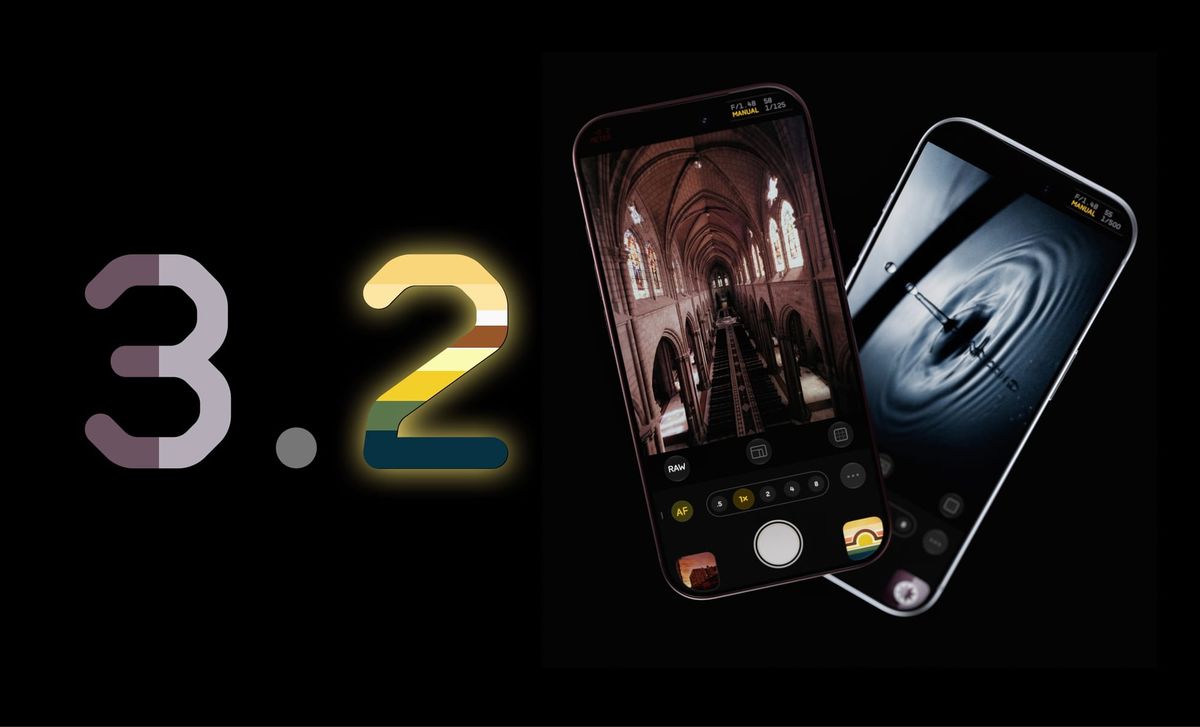
Lux Optics released Halide 3.2 on 30 September, letting iPhone 18 Pro owners pick any aperture from f/1.48 to f/4.0 rather than Apple's four presets.
Lux Optics released Halide 3.2 on 30 September, adding control of the iPhone 18 Pro variable aperture to its camera app.
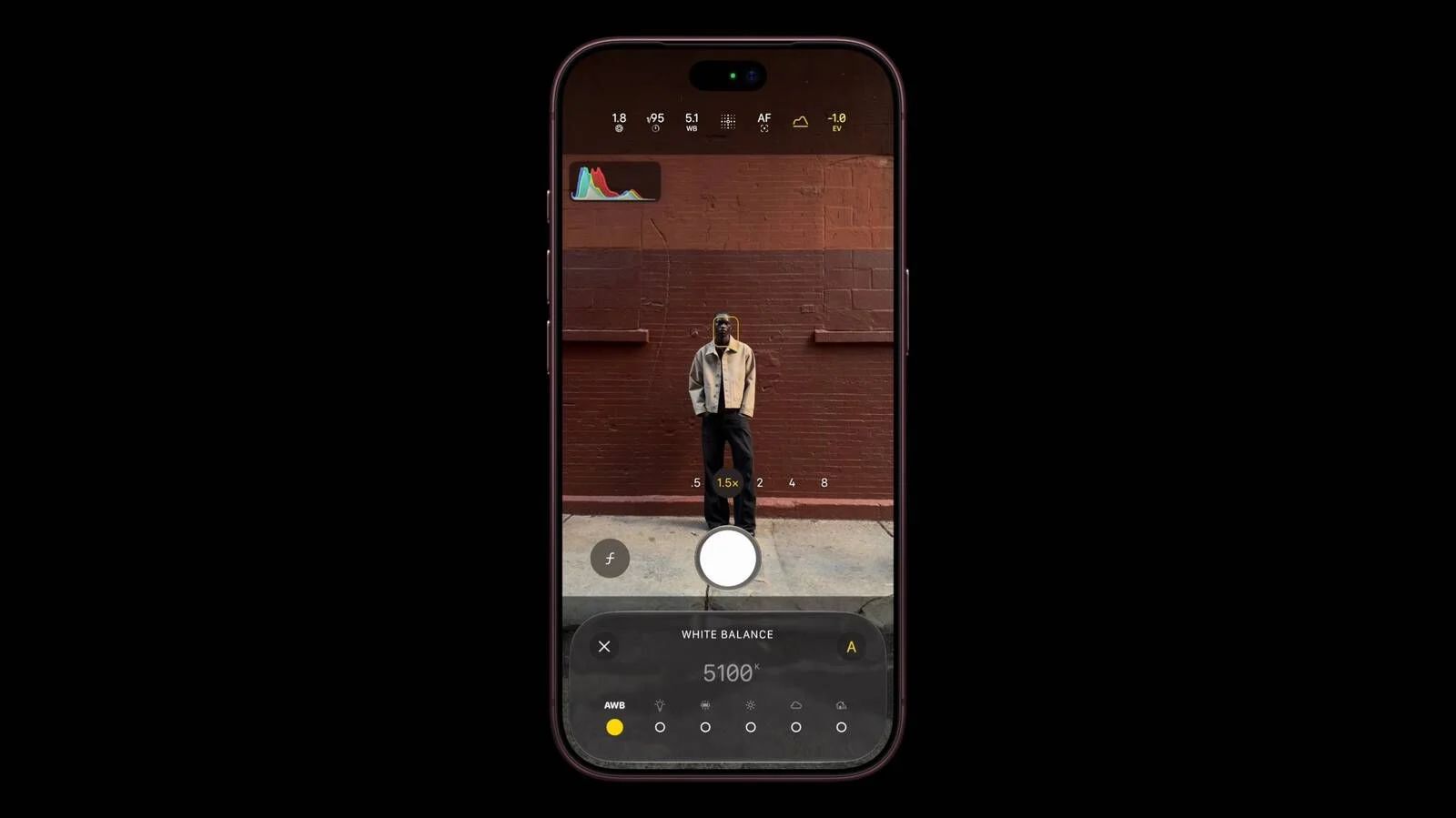
In its release post, Lux says Halide can select any f-number from f/1.48 to f/4.0 on the iPhone 18 Pro and iPhone 18 Pro Max. Apple's own Camera app offers four presets, which Apple's specifications page lists as f/1.48, f/1.8, f/2.8 and f/4.0, along with an automatic mode. iClarified reports that the control applies to the 48MP Fusion Main camera, the only lens Apple lists with a variable aperture.
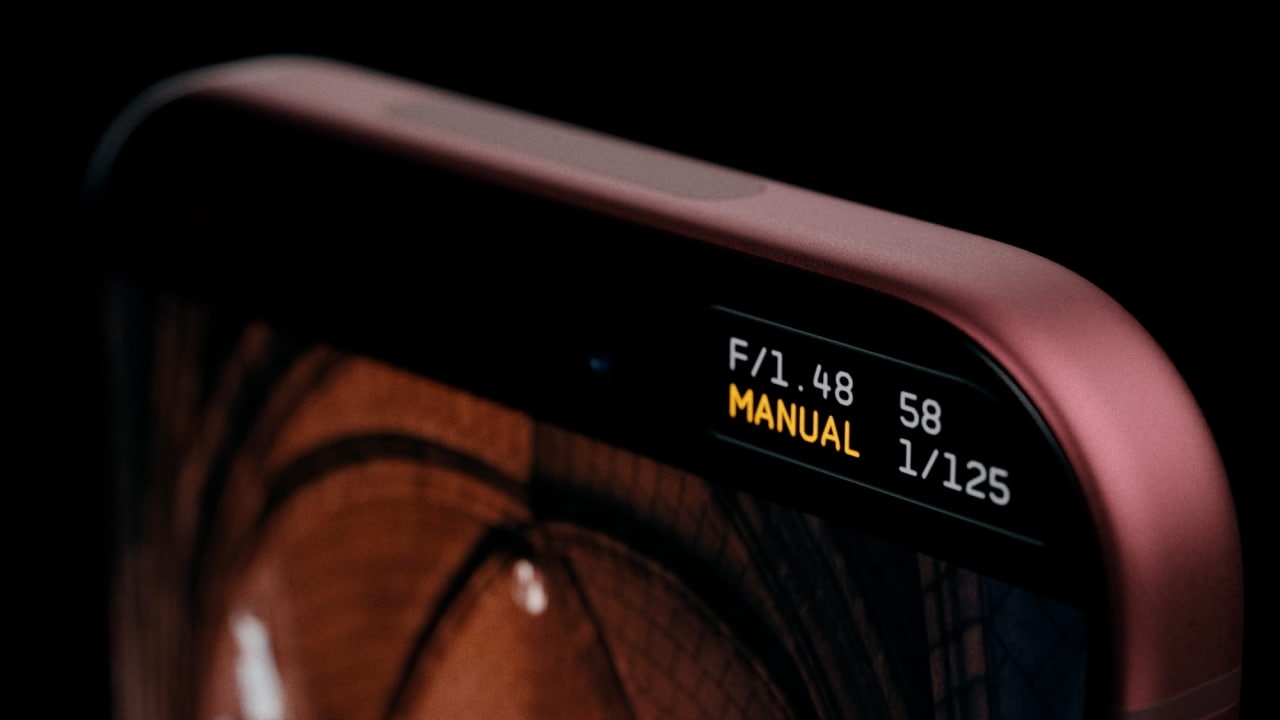
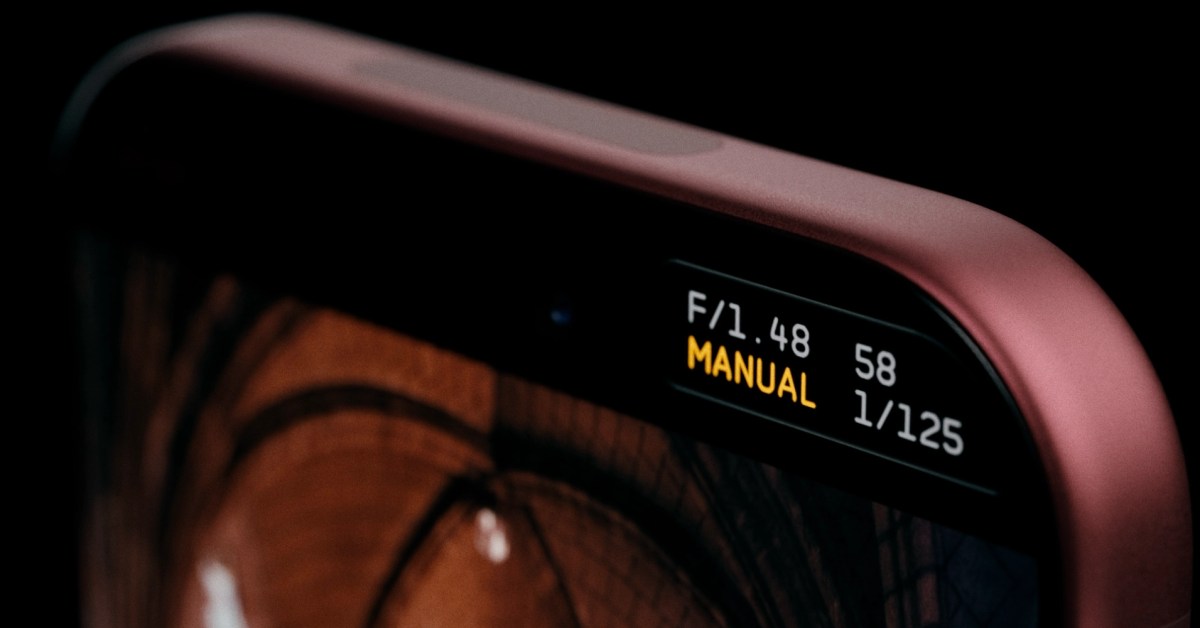
Halide offers the aperture in two ways. Aperture Priority holds the chosen f-number and lets the app pick shutter speed and ISO. A fully manual mode sets all three. Lux points out that Apple's Camera app now has manual shutter speed and aperture but no manual ISO, and says it has a longer piece on why still to come. The update also adds two looks, Dawn and Quicksilver, which work on every iPhone Halide supports rather than only the new models, and 9to5Mac reports a 16:9 aspect ratio mode. Halide Mark III costs $19.99 a year or $69.99 outright in the US, with a seven-day trial, according to iClarified.
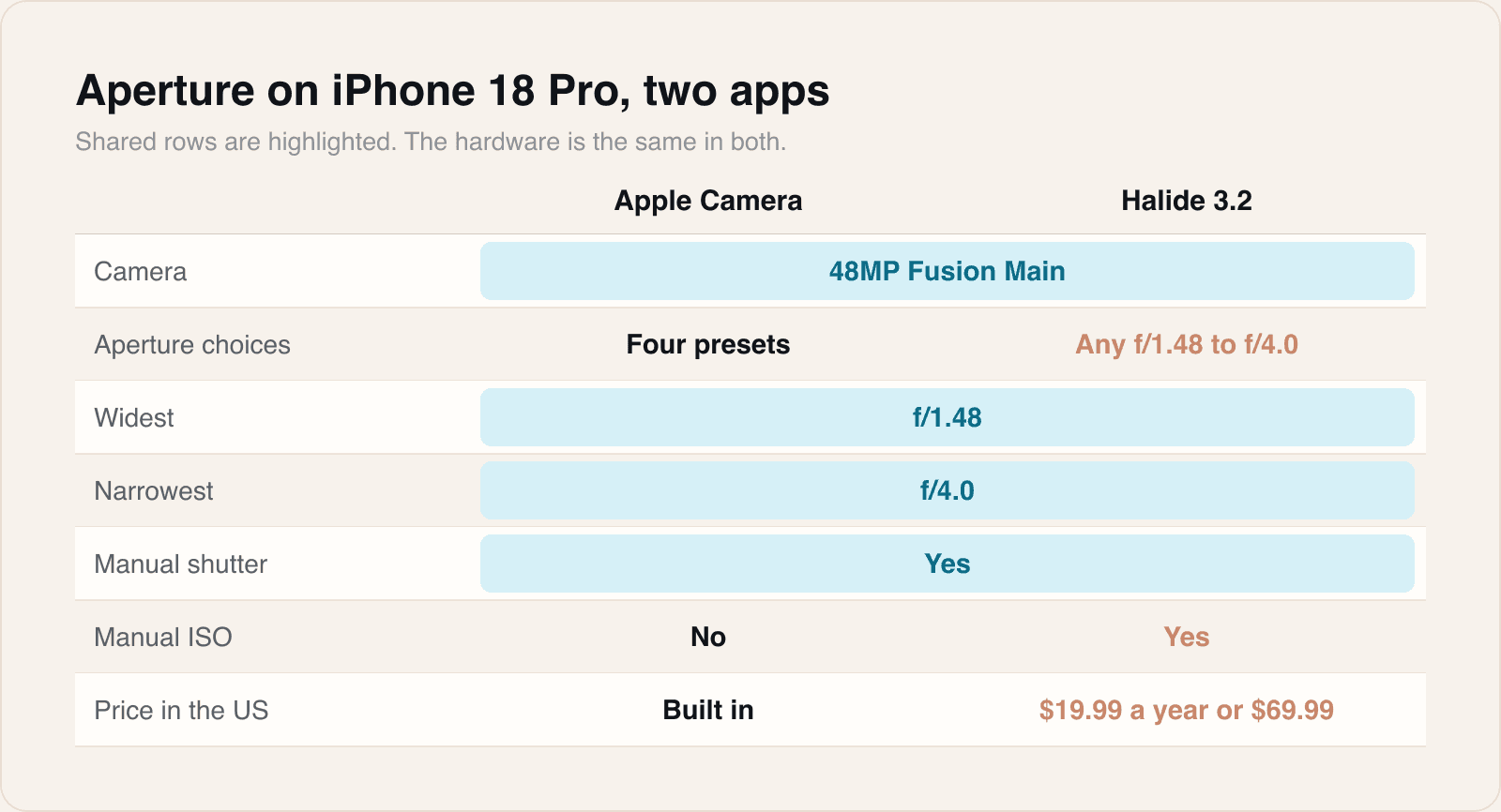
Is the iPhone 18 Pro aperture continuous or four stops?
For a third-party app, Halide 3.2 is the first shipping evidence that it is not limited to four. When Final Cut Camera gained aperture control on 29 September, we reported that Apple lists four f-stops for the iPhone 18 Pro rather than a range, and read that as the limit of what an app could set. Lux's release says otherwise, and gives f/2.1 and f/3.89 as examples of values a user can now pick.
The earlier reporting allowed both readings. MacRumors wrote on 9 September that six laser-cut blades move smoothly between four aperture settings, and that a new API gives third-party apps access to the same range of settings. Apple's specifications page names four values and says nothing about anything in between.
Two things Lux does not say. It does not name the API Halide uses, so it is still not possible to point a developer at Apple documentation for it. And it does not say whether the iris physically holds a value such as f/2.1 or whether the system moves to the nearest position it supports and reports the requested number. Lux promises a longer technical piece on the camera, which may answer the second.
Our take
On 29 September APPDOOK told anyone building a camera interface that four fixed stops wanted a segmented picker, and that a slider would be a control lying about its own resolution. On the evidence of Halide 3.2, that advice was wrong for third-party apps. If the system accepts any value between f/1.48 and f/4.0, a slider or a dial is the honest control, and a four-position picker throws away range the hardware offers. We would rather say that plainly than leave the earlier piece standing as written.
What we would still tell an app maker is to read the value back. Until Apple documents how the aperture behaves between its presets, the only way to know whether a requested f/2.1 is the f/2.1 the sensor sees is to ask the device after setting it, and to show the user that number rather than the one they asked for. A camera that displays a setting it did not achieve is worse than one with fewer settings.
The more interesting question is why Apple's own app offers four. A continuous range is plainly not ruled out by the hardware if Halide can reach it, so the presets in the Camera app look like a design decision: four choices are easier to understand than a sweep, and the automatic mode covers everyone else. Apple has done the same with ISO, leaving manual control out of its own app while, as Halide shows, allowing it to others. The pattern is that the Camera app is built for the many, and the full instrument is left for apps like Halide and Apple's own Final Cut Camera to expose.
For most people the practical difference between f/1.8 and f/2.1 is small. Where continuous control earns its place is Aperture Priority, where a photographer fixes depth of field precisely and lets exposure follow, which is how dedicated cameras have worked for decades. That this arrives first from a small independent developer, three weeks after launch and before Apple has published the API anywhere we can find, says the capability was there for anyone who went looking.
Sources
 Halide 3.2: The App for ApertureLux Optics, 2026-09-30
 Halide 3.2 Adds Continuous Aperture Control on iPhone 18 ProiClarified, 2026-09-30
 Halide 3.2 pro camera arrives with iPhone 18 Pro aperture feature and two new looks9to5Mac, 2026-09-30
 iPhone 18 Pro Gains Manual Aperture, Shutter Speed Controls, and MoreMacRumors, 2026-09-09
 iPhone 18 Pro and iPhone 18 Pro Max - Technical SpecificationsApple, 2026-09-29
Reporting and images linked above belong to their respective publishers and are shown from their own servers. The analysis here is our own.