
Apple's hardware chief asks to be held accountable on the iPhone Duo crease
Apple's hardware engineering VP told TechRadar on 18 September that the iPhone Duo's matte display will keep its crease from becoming more visible with use.
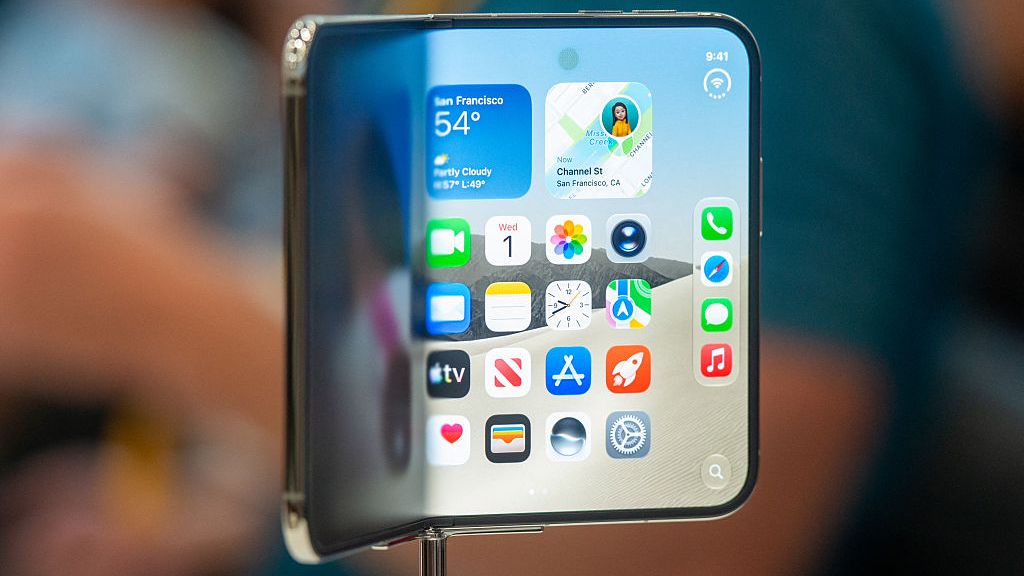
Apple's vice president of hardware engineering, Tom Marieb, told TechRadar on Friday 18 September that the iPhone Duo's matte inner display should stop its crease becoming more visible with use.
The remarks came in a group interview with journalists at Apple's London headquarters, published by Axel Metz. Asked about the pattern on other foldables, where a crease looks minimal out of the box and grows more prominent within months of heavy use, Marieb invited scrutiny directly. His words were "Hold us accountable to that, please", and he then attributed the confidence to the finish rather than to the hinge, explaining that the specularity of a glossy display makes topology differences easy to pick up, and that a matte surface is more forgiving of changes over time. MacRumors and 9to5Mac both carried the exchange over Friday and Saturday.
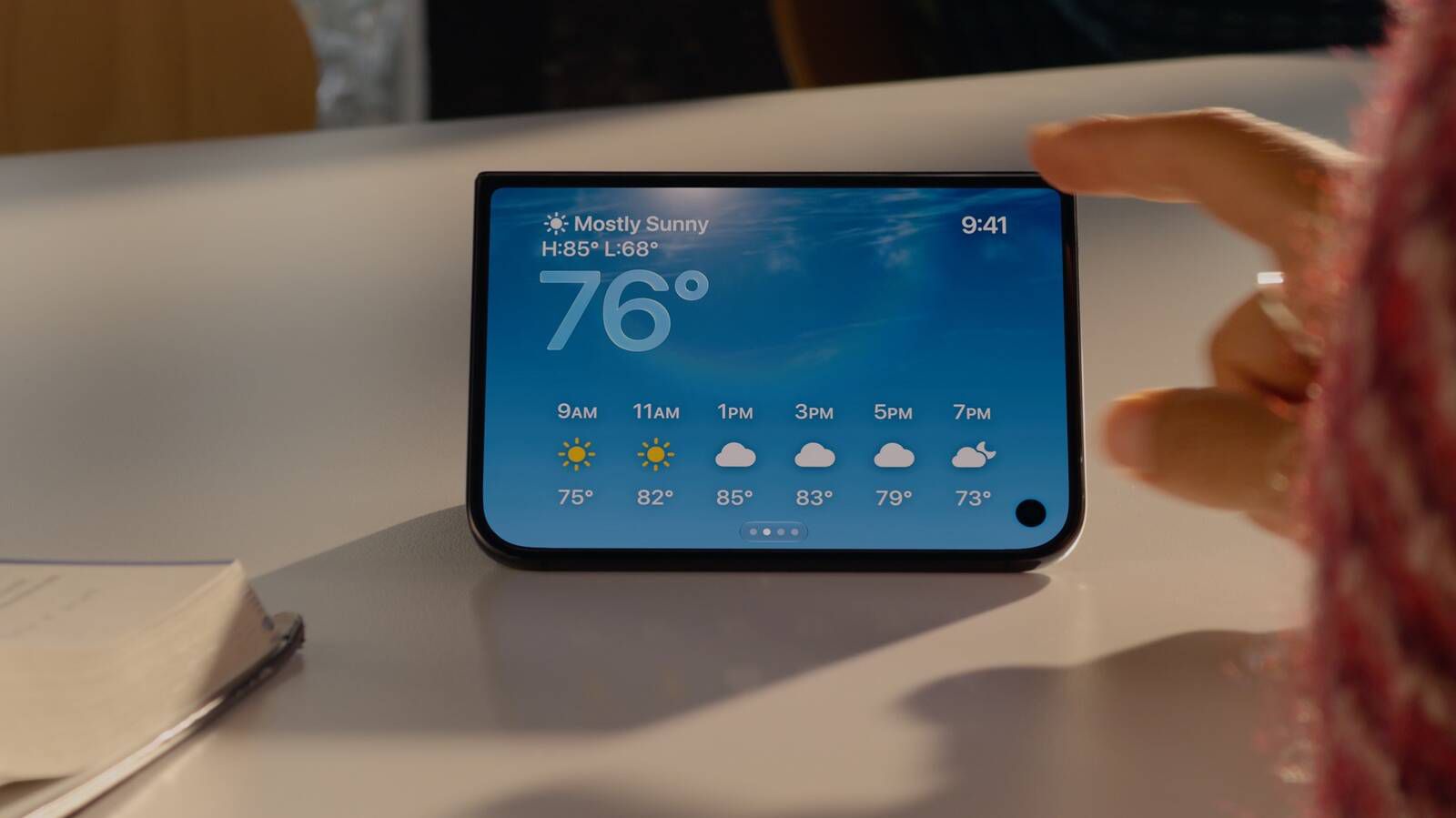
On the hinge itself, Marieb said the work he was proudest of was the torque profile, which Apple tuned so that closing the device feels solid in the way a high-end car door does, and so that the half-folded positions do not feel floppy. Those positions are product features: TechRadar describes a Seated mode that puts content on the upper half with controls below, and a Standing mode that turns the Duo into a bedside clock, photo gallery or weather display through StandBy. Marieb said a lot of blood, sweat and tears went into getting the torque right at both ends of the travel and in the middle.
The most substantive part of the interview was about method. Marieb said Apple does not build tests around old military specifications or old standards, but instead asks how customers actually use a device and writes tests that mimic that. Apple then accelerates them, and by his account can represent five years of life or more inside a couple of weeks of testing. He applied the same framing to Ceramic Shield 2, describing scratch resistance and wear resistance as partly working against each other in most materials, and saying Apple could have made the glass more scratch-resistant at the cost of wearing away faster. He also said screen protectors make his skin crawl.
What Apple publishes about the hinge
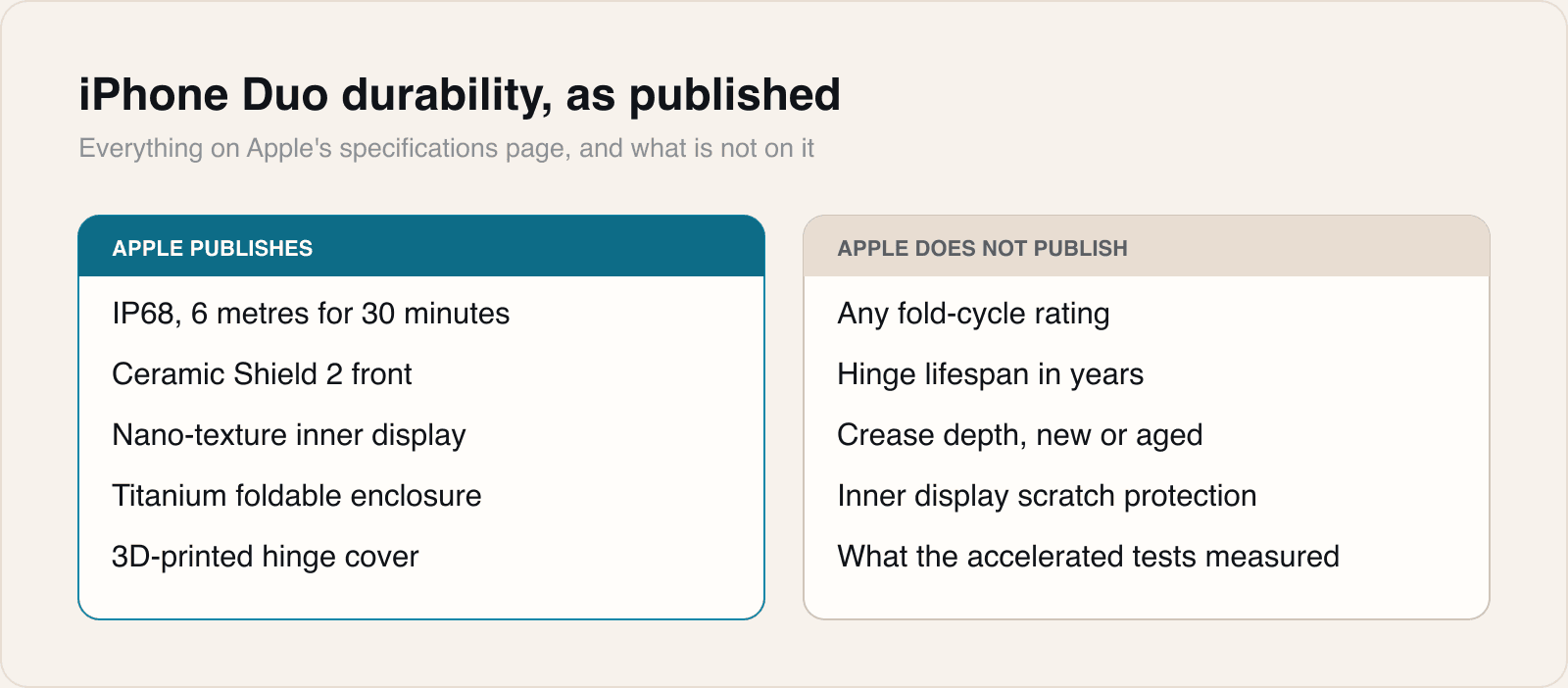
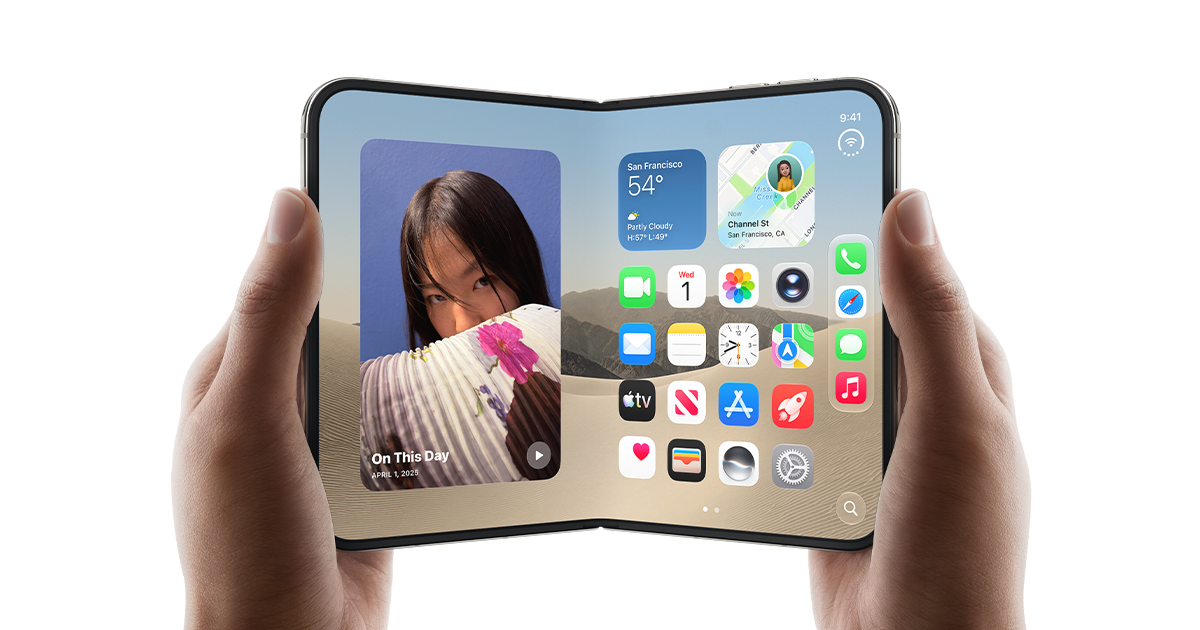
Apple's iPhone Duo specifications page rates the device IP68, to a maximum depth of six metres for up to 30 minutes under IEC standard 60529. It lists a Ceramic Shield 2 front, a nano-texture finish on the 7.6-inch inner folding display and no stated finish on the 5.4-inch outer one, and a titanium foldable design with 85 per cent recycled titanium in the enclosure and 100 per cent recycled titanium in the 3D-printed hinge cover. It gives no fold-cycle figure, no hinge lifespan and no measure of crease depth at any age.
Our take
An invitation to be held accountable needs a number to be held accountable against, and Apple has not provided one. This is the gap the whole story sits in. Marieb described, in real detail and convincingly, a method for finding out how a hinge ages; Apple then published none of what the method found. A reader who takes him at his word still has nothing to check in two years except their own eyes, and a crease is precisely the kind of defect that everyone perceives differently and nobody can adjudicate. The accountability on offer is therefore rhetorical, not because Marieb is being evasive but because the specification sheet he works behind does not have a field for it.
We think the accelerated testing claim deserves more attention than the quotable bits around it. Compressing five years into a fortnight is the correct way to do this work and it is genuinely hard, because the compression is only valid if the acceleration factor is right, and the acceleration factor is a modelling assumption. Marieb's stated basis for it is sound and unusual: measure how people really use the thing rather than inherit a standard written for something else. But the consequence of rejecting published standards is that there is no longer an external yardstick, and a company grading its own homework is asking for trust in place of evidence. Apple has generally earned that trust on iPhone reliability. A folding screen is the first component in years where the failure mode is gradual, visible and unarguable, and trust is a weaker instrument for that than a number would be.
The matte finish argument is cleverer than it first sounds and should be understood for what it is. It does not claim the crease will not deepen. It claims a diffuse surface scatters light so that a change in topology is harder to see, which is a treatment for the symptom people actually complain about rather than the mechanism underneath. That is legitimate engineering and a reasonable thing to optimise, since a crease nobody notices is not a problem. It is also, on Marieb's own phrasing, an acknowledgement that there are changes over time to be forgiving of. Both halves of that are worth holding in mind on 23 October.
For anyone building for this device, there is a second-order consequence nobody is discussing. Seated and Standing modes are software features that depend on a mechanical property, namely a hinge holding an arbitrary angle against gravity for hours. Torque is the part of a folding mechanism that degrades first and most predictably, and Apple has published no figure for how it holds up. An app designed around a Duo propped half-open on a bedside table is making a three-year bet on a component with a one-line specification. Our advice is unglamorous: build those modes so the app is still sensible if the device ends up flat on a table, and do not make a pose a requirement for a feature to work.
Sources
 Apple's new VP of Hardware Engineering on the iPhone Duo hinge and Ceramic Shield 2TechRadar, Axel Metz, 2026-09-18
 Apple Exec Says Hold Us Accountable on iPhone Duo CreaseMacRumors, 2026-09-19
 Apple VP of hardware talks iPhone Duo durability, crease, hinge, and more9to5Mac, 2026-09-18
 iPhone Duo Technical SpecificationsApple, 2026-09-09
Reporting and images linked above belong to their respective publishers and are shown from their own servers. The analysis here is our own.