
Apple tells Congress that App Store rule 1.1.1 removed ICEBlock, and names the then Attorney General
A July letter from Apple to Representative Jamie Raskin, reported on 29 September, sets out why ICEBlock and similar apps left the App Store in October 2025.
Apple has told a member of Congress that it removed ICEBlock and similar apps from the App Store because of concerns about the safety of immigration officers, in a July letter whose contents CNN reported on 29 September.
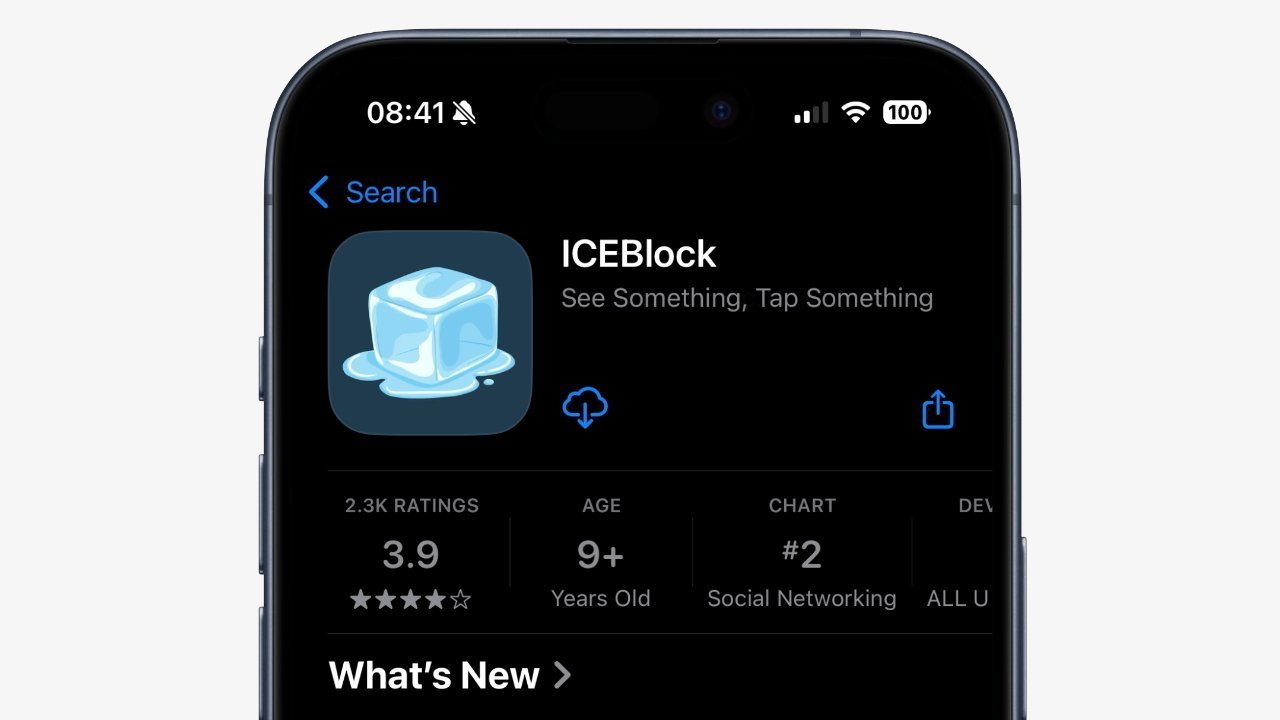
ICEBlock crowdsourced sightings of Immigration and Customs Enforcement agents and showed them on a map in close to real time. Apple approved it in April 2025, according to its letter, after the developer addressed privacy concerns raised during review. Apple removed it, along with apps of the same kind, in October 2025. The letter was written in July 2026 to Representative Jamie Raskin, the Maryland Democrat who is ranking member of the House Judiciary Committee and who opened an investigation in February 2026 into the Justice Department's role in the removals from both Apple's store and Google's.
The stated ground is App Store Review Guideline 1.1.1, which covers objectionable content. Apple's notice to the developer said the app violated that rule because its purpose was to provide location information about law enforcement officers that could be used to harm them. In the letter to Raskin, Apple went further on its reasoning, arguing that precise locations of ICE officers also exposed other people near them, protestors and detainees among them, and amounted in Apple's words to "a potential roadmap for targeted violence". Apple set that against a fatal shooting at an ICE office in Dallas in which two detainees died.
What the letter says about government pressure
It names a person. According to CNN and AppleInsider, Apple's letter states that then-Attorney General Pam Bondi had "expressed serious concerns to Apple" that ICEBlock threatened the safety of federal officers. Apple does not say it received a legal order, and the Justice Department has previously denied issuing one. The distinction Apple is drawing is that it was told of a concern and then reached its own conclusion under its own rule.
Raskin rejects the reasoning on the facts. He has said there is no evidence the apps were used in the Dallas shooting, and pointed out that the target was a fixed government building that needed no tracking app to find, noting that the attacker used Apple Maps, which remains on the store. He has argued the removal suggests Apple may be "working with the government to violate its customers' First Amendment rights" to record and report on the activities of their own government, and has asked Apple to conduct a fresh independent review.
Only excerpts of the letter have been published. The full text is not public, so what Apple says about the weight it gave the Attorney General's concern, beyond the one quoted sentence, cannot be read. None of the reporting states how many apps were removed in total, and none names any of them other than ICEBlock.
Our take
The document is more interesting for its timeline than for its rule. April 2025, approved after a privacy review. October 2025, removed. Between those two dates the app did not change, and neither did Guideline 1.1.1. What changed was a shooting and a phone call from the Attorney General, and Apple's letter is an argument that only the first of those mattered.
APPDOOK's reading is that the letter is careful in a way that tells you what it is defending against. Apple never says it was ordered to act, because it was not, and saying so would be the admission that ends the argument. It says a concern was expressed and that Apple then applied its own guideline. Both halves are probably true and the sequence is still the whole story, because the guideline had been sitting there unenforced against this app for six months. A rule that exists the whole time and is applied the week after a cabinet official rings is not doing the work the letter says it is doing.
Does this change what App Review can remove?
Formally, no. Guideline 1.1.1 has not been amended, and nothing in the reporting suggests a new category of prohibited app. What the episode shows is something the guidelines have never described: that the set of things which can get an app removed is larger than the set of things written down, and includes the political temperature around what the app does. That is not a hidden rule so much as an absent one, and it cannot be tested against before shipping.
The practical consequence for anyone building on the platform is that approval is a decision about a moment rather than a licence. ICEBlock passed review on its merits and was removed eighteen months later without breaking anything it had been approved under. If your product's legality or acceptability depends on who is in office, the App Store is a distribution channel with a political risk attached, and the mitigation is dull and worth doing anyway: keep the data exportable, keep a web version that works, and do not build a business whose only route to its users runs through a single review queue.
Where we would not join Raskin is the framing that Apple is simply an agent of the government here. Apple has spent years refusing to build what governments ask for, and is at this moment in front of a tribunal in London trying to lift the secrecy around a British encryption order. A company that fights that fight does not obviously capitulate over one app. The likelier and less satisfying reading is that Apple genuinely found the safety argument persuasive after a fatal shooting, and that a concern raised by the Attorney General was what made it look at the app again at all. That is a smaller failure than collusion and a real one, because it means the review that matters is the one nobody outside Apple can see.
Sources
 Apple explains last year's controversial decision to remove ICE tracking apps from App StoreCNN, 2026-09-29
 Apple Explains Why It Removed ICE Tracking Apps Last YearMacRumors, 2026-09-29
 Safety concerns forced ICEblock removal, Apple tells lawmakerAppleInsider, 2026-09-29
 App Review GuidelinesApple Developer, 2026-09-29
Reporting and images linked above belong to their respective publishers and are shown from their own servers. The analysis here is our own.