What reviewers found in their Apple HomeView hands-ons: loud and simple, with face recognition still untested
Seven outlets handled HomeView at Apple's launch. They liked the sound and the size, but none could test face recognition or Siri AI properly.
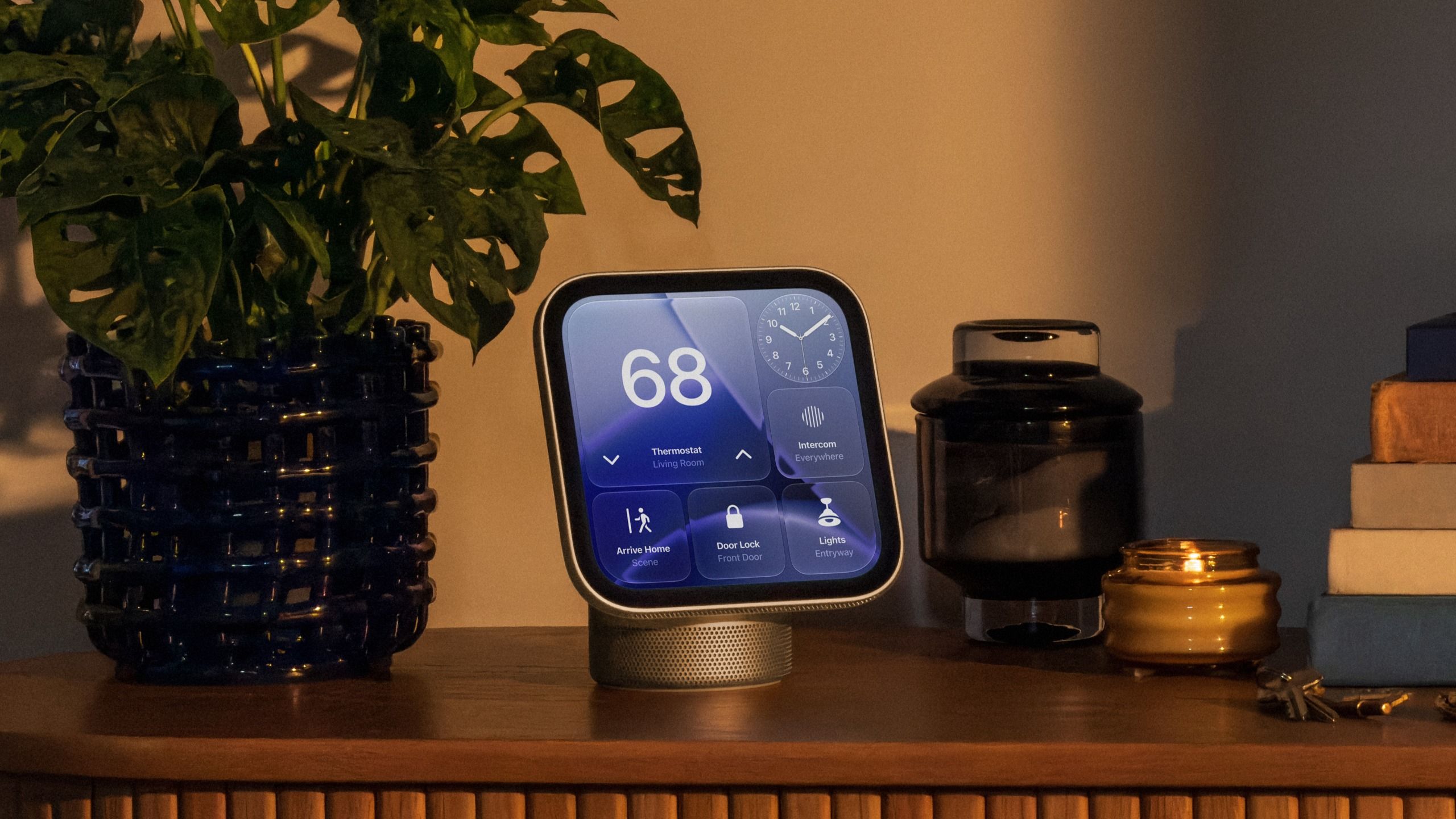
Seven publications have now published hands-on impressions of Apple HomeView, the $299 smart display Apple announced on 13 October and ships on 13 November.
None of them is a full review. Gizmodo, Engadget, TechRadar, Macworld and CNN Underscored wrote theirs on launch day after demos at Apple's event, and AppleInsider and The Verge followed on 14 October. Every reviewer describes short, supervised sessions, several in a crowded demo room. Engadget's Billy Steele called the setting noisy and chaotic, and The Verge's Jennifer Pattison Tuohy says plainly that she has yet to test the device.
Who tried HomeView, and what could they touch?
Outlet | Reviewer | What they report | Main reservation |
|---|---|---|---|
Gizmodo | Raymond Wong | Sound at full volume, the tilt, the clock faces | Face and voice recognition shown by Apple only |
Engadget | Billy Steele | Siri with iPhone context, recipe handoff, guest mode | Too brief and noisy to judge Siri |
TechRadar | Jacob Krol | Volume, lyrics on screen, multi-step Siri | Fewer features than an Echo Show, less open |
Macworld | Michael Simon, Britta O'Boyle | Design, the wall model | Must sit near a socket |
CNN Underscored | Mike Andronico, Henry T. Casey | Size, volume | Wall model likely quieter |
AppleInsider | AppleInsider staff | Faces, mirror mode, recipes | Only Apple's own apps on demo units |
The Verge | Jennifer Pattison Tuohy | Size, multi-user, home controls | Home controls mirror the iPhone's Home app |
Where the reviewers agree
On sound, the three who describe the tabletop speaker at volume are positive. Gizmodo heard it at 100 per cent rattle a nightstand with deep bass and no distortion. TechRadar found it loud without distortion, and CNN Underscored called it impressively loud. Apple puts a down-firing woofer and two force-cancelling passive radiators in the base, behind two full-range drivers in the display.
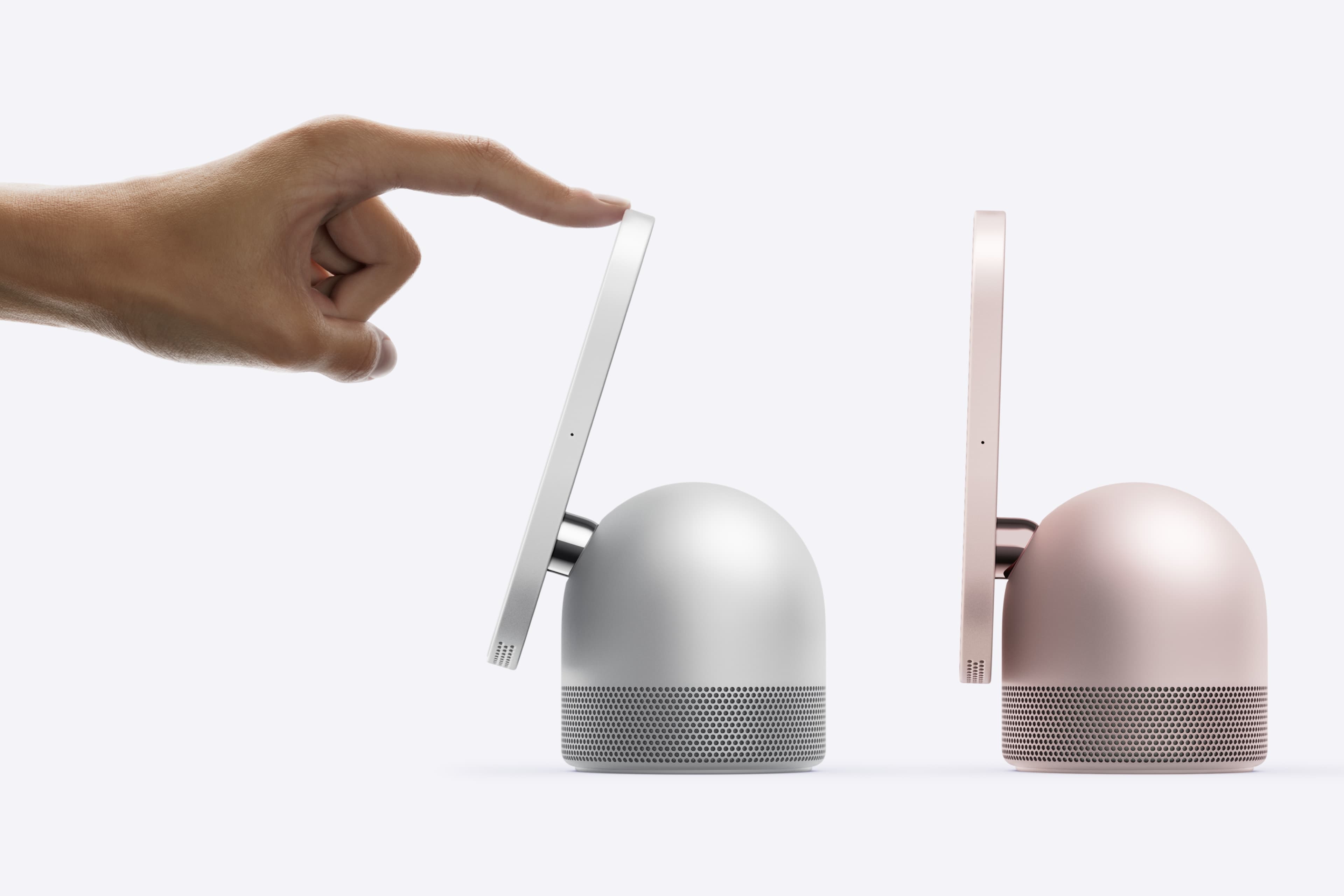
On design, nobody is negative. Gizmodo and Macworld both see the iMac G4 in the domed base and steel neck, and Gizmodo calls the tilt smooth as butter. It is manual only: Gizmodo notes that the rumoured motorised swivel that would turn the screen towards a recognised face did not materialise. AppleInsider found the screen bright, and dim enough for a bedside.
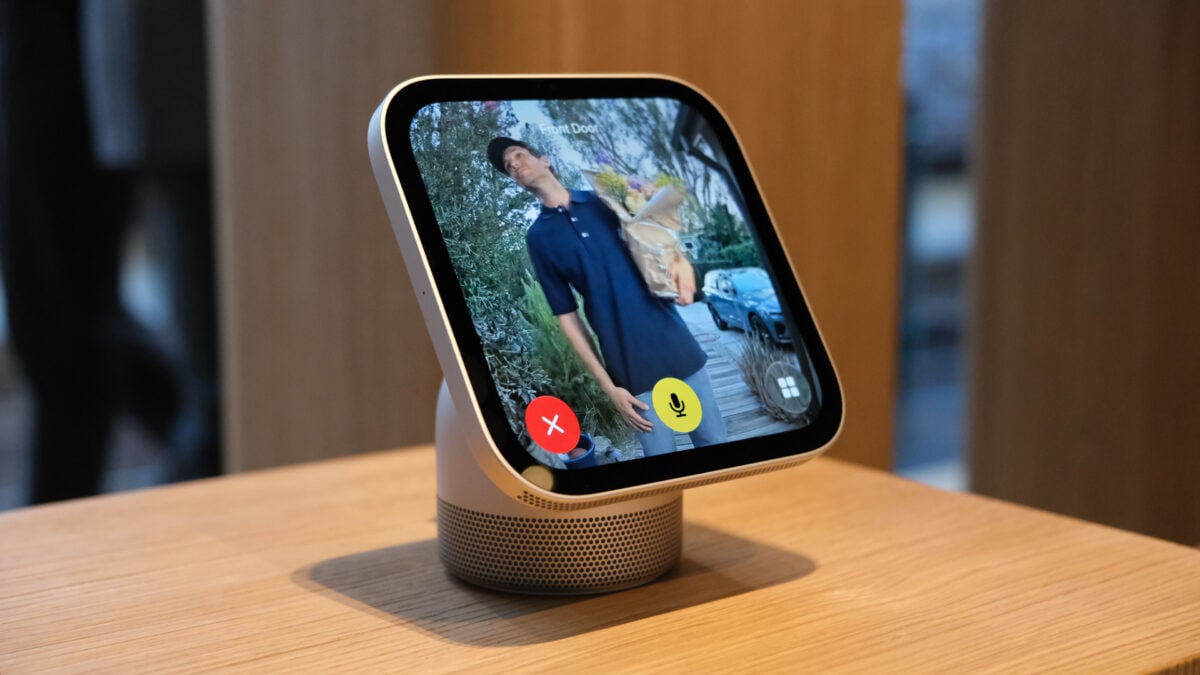
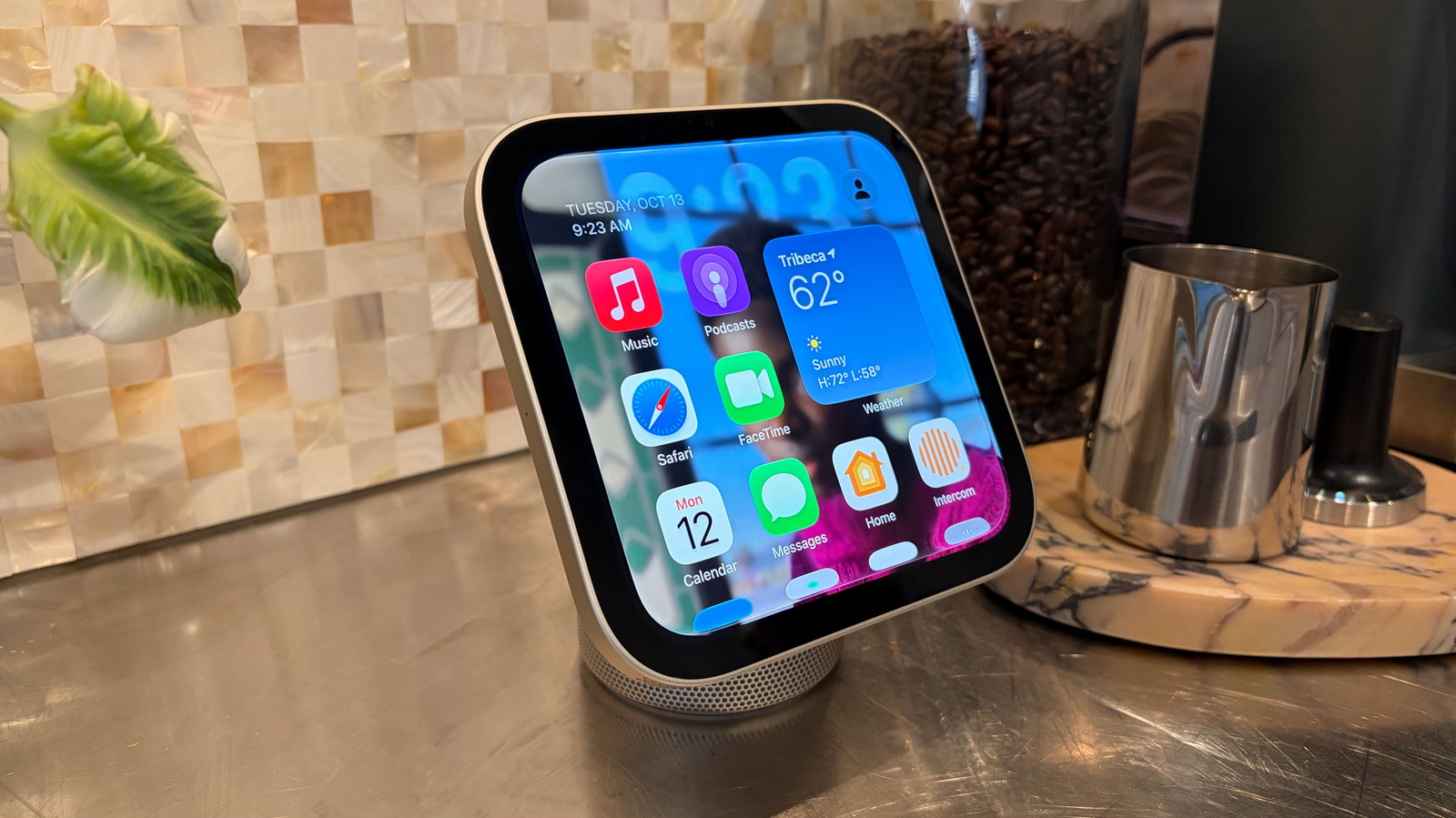
On software, the demos went well. Engadget saw a Siri request that drew on a message on a paired iPhone work quickly, and held an iPhone near the display to send a Safari recipe across, which then appeared with tappable timers. AppleInsider had Siri step through a recipe hands-free. Gizmodo watched a FaceTime call, doorbell and camera footage, and recipe timers run without a fault, and found the A18 kept the interface smooth.
Where they differ
Size reads differently depending on what was measured. The Verge says the footprint is smaller than most smart displays Tuohy has tested, while CNN Underscored found the unit considerably thicker than an iPad. Macworld liked the wall model's look but found it a little bulky for a wall, and points out that both models cost $299, so the tabletop version works out cheaper once the wall model's mount is added. Apple's own list confirms it: Power Mounts start at $59.95.
The verdicts split on how much HomeView does. TechRadar calls it one of Apple's strongest new category entries in quite some time, while conceding it does less than an Echo Show and is less open. The Verge was disappointed that its home controls mostly repeat the Home app on an iPhone, and thinks enthusiasts may find it too simple. AppleInsider plans to buy three; Gizmodo thinks people in apartments without many smart accessories will get less out of it.
What did nobody test?
The feature HomeView is built on. Gizmodo reports that attendees could not try face or voice recognition themselves: an Apple spokesperson demonstrated it on devices already paired. That matters because personal content appears only when HomeView sees an enrolled face and the person's iPhone is nearby and recently unlocked, as we explained in how HomeView recognises each member of a household. Nobody has yet said how it copes with a poorly lit kitchen, a child, or a visitor.
Nobody heard the wall model, which Apple gives two custom drivers tuned for a wall but not the base's woofer and radiators; Engadget and CNN Underscored both expect less bass. Nobody connected it to their own Wi-Fi or their own accessories. And nobody had a third-party app: AppleInsider reports only Apple's apps on the demo units, which follows from HomeView having no App Store and borrowing apps from the iPhone, as CarPlay does.
Our take
Seven first impressions agreeing on sound and build is useful, and it is also the easy part. The hardware is the bit Apple can show well in a room full of journalists. The case for HomeView rests on Siri AI and on recognising who is standing in front of it, and those are exactly the parts a supervised, noisy demo cannot test. Bloomberg reported earlier this month that Apple built the home hub's software around Siri, with touch as the backup. If that is the design, a fair review needs a quiet kitchen, a real household and a week. Apple also notes that Siri AI is a beta in HomeView 27.2, with daily limits on some server features, which none of the hands-ons mentions.
From the side of someone who builds iOS apps, the recipe detail is the most practical finding. Engadget says recipe mode works on pages formatted to the structured standard Google uses, and AppleInsider asks whether recipes can come from anywhere other than Safari. Our reading, which Apple has not confirmed, is that sites already marking up recipes for search will work on HomeView on day one, and recipe apps such as Paprika will need Apple to open the CarPlay-style model to them. That is the question APPDOOK will be watching when Apple publishes developer documentation.
The Verge's criticism is the one we think will last. A display that only mirrors the Home app is a convenience, not a new reason to buy accessories, and Apple Home Collection does not arrive until December. Until full reviews land, the honest summary is: well made, loud for its size and promising, at $299 and not on sale in the EU. Pre-ordering now means buying the part reviewers liked and trusting Apple on the part nobody tested.
Sources
 Meet Apple HomeView, a new way to enjoy entertainment, stay connected, and manage the homeApple Newsroom, 2026-10-13
- Apple HomeView hands on: So many questions, but I like itAppleInsider, 2026-10-14
 The best feature of Apple's HomeView might be its simplicityThe Verge, Jennifer Pattison Tuohy, 2026-10-14
 Apple HomeView Hands-On: It's Pretty Damn Cute, but Do You Need One?Gizmodo, Raymond Wong, 2026-10-13
 Apple HomeView hands-on: Siri AI is your new roommateEngadget, Billy Steele, 2026-10-13
 I've seen Apple's HomeView smart display in actionTechRadar, Jacob Krol, 2026-10-13
 HomeView first look: Apple's adorable new smart hub oozes personalityMacworld, Michael Simon and Britta O'Boyle, 2026-10-13
 Apple HomeView hands-on: Release date, preorders and moreCNN Underscored, Mike Andronico, 2026-10-13
Reporting and images linked above belong to their respective publishers and are shown from their own servers. The analysis here is our own.
How we report: editorial policy. Spotted an error? Report a correction.
Newsletter
Apple news, in your inbox
Get APPDOOK's Apple news by email, checked against the source like everything here.
Follow APPDOOK
New Apple stories every day, checked against Apple’s own sources.